Just imagine this: you’re in a meeting to onboard a new property, and at the same time, a guest from your current listing can’t find the building entrance. What matters more?
We both know — both are important. One keeps your business running, and the other helps it grow.
If you try to handle everything in your short-term rental business alone, you can sustain it. But taking on five new properties in a year becomes almost impossible.
Isn’t that enough reason to consider choosing an Airbnb co-host service for your STR business?
At the end of the day, it’s totally up to you — do you want to just sustain, or do you want to grow?
Let’s dive into the details.
Table of Contents
What Is an Airbnb Co-Host?
An Airbnb co-host is someone who assists the property owner in managing their short-term rental. They take care of day-to-day operations to ensure guests have a seamless and enjoyable stay. Also, they help with administrative work for the property owner.
A co-host is not the same as a property manager.
While traditional property managers often handle long-term rentals and charge higher fees, co-hosts specialise in short-term rental operations, from guest communication to Airbnb SEO, and usually work on a performance-based commission.
Typical roles of a co-host include:
- Guest communication and reservation management
- Coordinating cleanings and inspections
- Organising check-ins and check-outs
- Listing creation and optimisation (photos, titles, descriptions, SEO)
- Dynamic pricing and market monitoring
- Handling emergencies or issues during guest stays
- Restocking essentials and monitoring supplies
Co-hosting is ideal for property owners who want to keep ownership and control but don’t want to spend their days dealing with messages, cleaners, and operational headaches.
Example:
A guest books at 10:30 PM. Instead of the owner waking up to respond, the co-host replies instantly, confirms the reservation, sends check-in instructions, and schedules cleaning, all while the owner sleeps.
That’s the value of a co-host.
How a Co-Host Can Help Property Owners
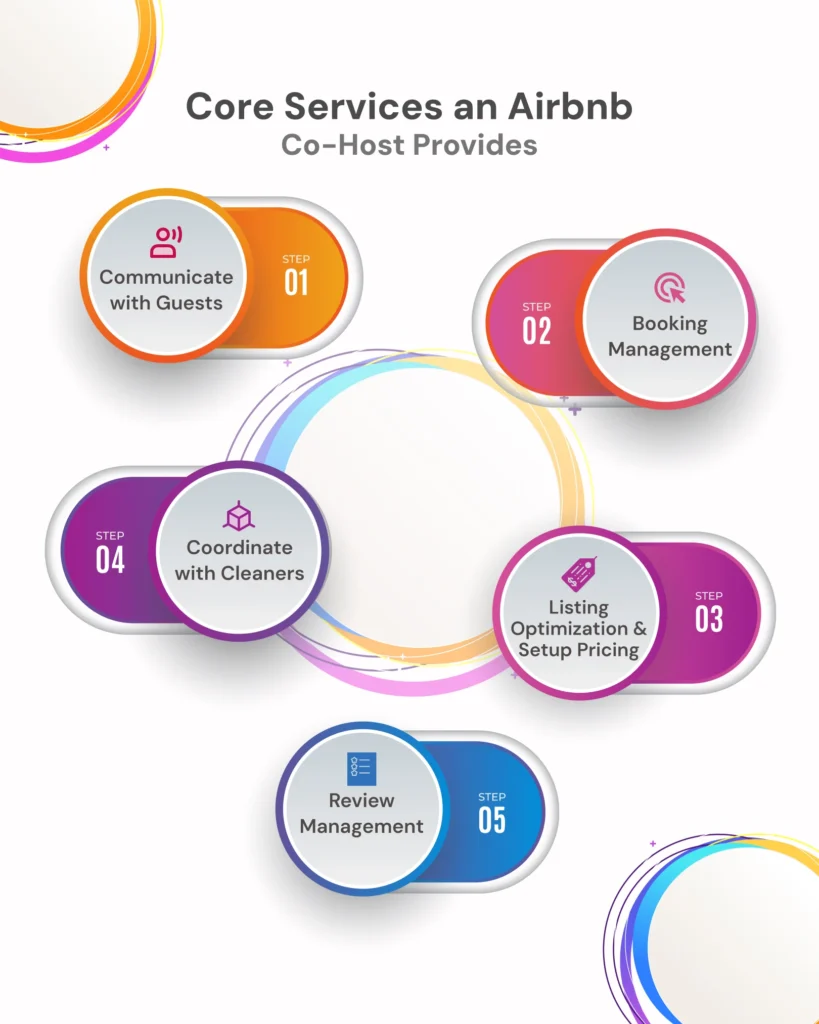
Normally, a good co-host helps property owners with all tasks related to their short-term rental business. Their main goal is to reduce the owner’s workload as much as possible. However, here are some of the key responsibilities of a co-host:
1. Guest Communication
- Respond to inquiries, bookings, and messages quickly
- Answer guest questions before, during, and after the stay
- Provide check-in/check-out instructions
- Handle special requests and give travel recommendations
2. Reservation Management
- Manage booking requests and confirmations
- Adjust pricing (if agreed with the host)
- Calendar checking to avoid any technical mistakes
3. Check-In & Check-Out Support
- Coordinate self-check-in or physical check-in
- Ensure guests understand arrival instructions
- Monitor check-out and confirm guest departure
4. Cleaning & Turnover Coordination
- Schedule cleaners after each stay
- Ensure the property is cleaned to standard
- Inspect cleaners’ work (through photos/videos)
- Keep the photos/videos to fight with Airbnb if necessary
- Refill basic supplies (towels, toiletries, tea, coffee, essentials)
5. Maintenance & Problem Solving
- Handle issues like Wi-Fi problems, appliance issues, leaks, etc.
- Contact maintenance teams when needed
- Monitor property condition and report damages
6. Review Management
- Encourage guests to leave reviews
- Write honest and helpful reviews for guests
- Monitor account health and maintain high ratings
- Follow up with the guests for review
7. House Rules & Compliance
- Ensure guests follow house rules
- Verify identity and number of guests
- Report rule violations if necessary
8. Financial Handling (Optional)
- Track expenses (cleaning, maintenance, supplies)
- Prepare monthly reports for the owner
- Manage deposits or extra charges for damages
- Collecting the Early check-in fee and the Late check-out fee
9. Listing Optimization
- Update photos, titles, and descriptions
- Improve listing quality and visibility
- Recommend design or furnishing improvements
10. Emergency Handling
- Be available for urgent guest issues
- Coordinate emergency repairs
- Support guests during unforeseen situations
After seeing the responsibilities of a co-host, doesn’t it come to your mind that you keep the ownership and profits, but lose all the stress?
Cost and ROI of Using a Co-Host
Most co-hosts charge 10%–25% of the booking revenue, depending on location and level of service. Also, sometimes, they charge a fixed amount for their service. While this is an additional cost, the increase in income usually outweighs the fee.
How a co-host increases your revenue:
- Higher occupancy rates
- Optimised pricing
- More professional listing presentation
- Better guest satisfaction = more repeat stays
- Fewer cancellations and issues
Example ROI
A property earning £1500/month managed by the owner could easily increase to £2000–£2500/month when professionally co-hosted due to improved operations and pricing optimisation.
Plus, the owner gains back hours of personal time every week, which is part of the overall return on investment.
A good co-host should not cost you money; they should make you more money.
Impact on Reviews and Bookings
Your Airbnb ranking depends heavily on reviews, response time, and listing quality. A co-host boosts all three.
How co-hosting helps:
- Instant replies improve your ranking in search results
- Professional conflict resolution prevents negative reviews
- Consistent cleaning standards raise your average rating
- Optimised listing quality drives more clicks and conversions
Before/After Impact
A poorly managed listing with an average rating of 4.2 stars can reach 4.7+ stars with professional co-hosting — dramatically improving search visibility and booking rates.
The result is more bookings, happier guests, and higher income for the owner.
When You Should Not Choose an Airbnb Co-Host
Not every Airbnb host needs a co-host, and in some cases, hiring one can actually be unnecessary or even counterproductive. Here’s when you shouldn’t consider bringing in a co-host.
1. You Only Have 2–3 Properties
With just a couple of listings, managing communication, cleaning schedules, and guest inquiries is often fully manageable without hiring additional help.
2. You Have Fewer Than 10 Properties, and Airbnb Is Your Main Business
If hosting is your full-time focus and the number of properties is still below ten, you may be able to personally handle operations without outsourcing.
3. You’re Not Interested in Scaling Your Business
If you’re satisfied with your current earnings and don’t plan to expand, bringing in a co-host may not add enough value to justify the cost.
If any of these situations apply to you, managing your Airbnb on your own may be the smartest, most cost-effective choice. It will also allow you to stay in control without added expenses.
Wrapping Up
Hiring an Airbnb co-host is one of the smartest decisions a property owner can make. From increased earnings to stress-free operations, a co-host ensures your listing performs at its highest potential while you enjoy passive income.If you’re ready to improve your listing’s performance, save time, and maximise your revenue, feel free to reach out.
Visit our Contact Page to learn how we can help manage your property effortlessly.