Yes, you can run an Airbnb without being there by using automation tools, a reliable local team, and remote management systems.
Many Airbnb hosts successfully manage their properties from another city or even another country. With tools like automated guest messaging, smart locks, and reliable cleaning services, you don’t need to be nearby every day to keep things running smoothly.
If you are wondering whether you need to live close to your Airbnb to manage it successfully, the answer is no. With the right tools and support in place, hosts can run their properties from almost anywhere.
Remote Airbnb hosting is no longer a trend; it’s a scalable business model. With the right setup, you don’t need to be physically present to deliver a 5-star guest experience.
Today we will talk about the benefits and drawbacks of running an Airbnb without being there.
What Does Running an Airbnb Remotely Actually Mean?
Remote Airbnb hosting means managing your rental property without being there in person. You might live in another city or even another country while your property continues to operate smoothly.
Technology and a reliable local team make this possible. Automated messages, smart locks, cleaners, and maintenance support help manage daily operations. With the right systems in place, guests can enjoy a great stay while you manage everything from anywhere.
Key Responsibilities of an Airbnb Co-Host
- Guest communication (pre-arrival → post-checkout)
- Check-in/check-out coordination
- Cleaning and maintenance management
- Pricing and calendar updates
- Handling guest issues and emergencies
- Listing optimization and content updates
- Review management and guest feedback follow-up
You may not be at the property, but the guest experience is still your responsibility. Success comes from having the right systems and support in place to keep everything running smoothly. To learn more about everything this role covers, see Key Tasks & Services an Airbnb Co-Host Handles.
Is It Really Possible to Run Airbnb Remotely Successfully?
Yes, it is absolutely possible to run an Airbnb remotely and do it successfully. Success depends on proper planning, clear systems, reliable local support, and consistent guest service, not on location. With the right setup, hosts can manage their rentals effectively from anywhere in the world.
Realistic Expectation
Remote Airbnb management is not the passive income dream most people picture. Revenue comes in automatically, but the operation behind it demands real attention. Guests ask questions, cleaners need to be scheduled, and unexpected issues can come up at any time. The good news is that you do not need to be there in person. You need good organization and reliable systems.
The hardest part comes at the beginning. Setting up your systems, finding a reliable local team, and organizing guest communication takes time and effort. Once that foundation exists, day-to-day management becomes far more manageable.
What Makes It Work
Clear processes are the foundation of successful remote hosting. When your cleaning, maintenance, and check-in procedures are clearly defined, everyone knows what to do. Your cleaner knows exactly how to prepare the property, your maintenance team knows how to handle issues, and the business keeps running smoothly without needing your constant involvement.
Reliable local support is important. A trustworthy cleaner and a dependable maintenance person can make a huge difference. When an issue arises, they are the one who can respond quickly and keep everything running smoothly. For a full breakdown of how to set this up day-to-day, check out How to Successfully Manage an Airbnb Co-Host Remotely (Complete System Guide).
Step-by-Step: How to Run an Airbnb Without Being There
Successful remote Airbnb hosting depends on reliable systems, local support, and organized processes. By using automation tools and building a trusted team on the ground, you can manage bookings, guest communication, cleaning, and maintenance from anywhere in the world.
1. Set Up Automated Guest Communication
Guest communication can quickly become overwhelming when you’re constantly replying to the same questions and sending the same messages.
Automation helps you stay responsive without being glued to your phone. Instant replies can handle common questions, scheduled messages keep guests informed throughout their stay, and saved templates help you send the same clear message to every guest. A simple automation setup can save hours each week while improving the guest experience.
Tools like Hospitable make it easy to automate guest communication and streamline your hosting workflow.
Fast response times help turn more inquiries into confirmed bookings. Guests are more likely to book when they receive quick answers to their questions. Responsive hosts often appear higher in search results, helping more guests find their listings and increasing booking opportunities. If you’d rather hand this off entirely, our Airbnb Virtual Assistant services cover round-the-clock guest communication for you.
2. Enable Self Check-in (No Physical Presence Needed)
A self-check-in system lets guests access your property without meeting you in person. Smart locks or lockboxes provide a simple, reliable way for guests to enter the property while giving hosts greater flexibility.
Create a unique access code for each guest and send clear check-in instructions before arrival. Include photos or a short video to make the process easy to follow. Automated messages can deliver access details on time, helping guests check in smoothly and reducing support requests.
3. Build a Reliable Cleaning System
A reliable cleaning system helps keep your property guest-ready after every stay. Work with professional cleaners who understand short-term rental standards and can deliver consistent results.
Create a detailed cleaning checklist (SOP) that covers every room and task. This helps maintain the same level of cleanliness, no matter who cleans the property.
Schedule cleaning automatically after each booking to avoid missed turnovers. Cleanliness is one of the biggest factors in guest satisfaction, and many hosting problems start when cleaning standards slip.
4. Have a Local Maintenance Backup
Have a trusted maintenance backup before you host remotely. Keep a reliable handperson on call for small repairs and quick fixes. Save the contact details of a qualified electrician and plumber so you can get help without delay.
Create a simple emergency protocol for urgent situations, such as power outages, water leaks, or lockouts. Make sure your team knows who to contact, what steps to take, and how to keep guests informed until the problem is resolved.
5. Use Dynamic Pricing Tools
Use a dynamic pricing tool like PriceLabs to adjust your rates based on local demand, seasonality, events, and market trends. This helps you charge more when demand is high and attract more bookings when demand is lower.
Dynamic pricing also keeps your property competitive against similar listings in your area. Instead of using the same price all year, you can adjust your rates based on demand. This helps you earn more money and keep your property booked more often.
6. Hire a Virtual Assistant or Co-Host
If you are too busy to handle all of this, you can hire a virtual assistant to handle guest messages, reservations, calendar updates, and other admin tasks. This saves time and keeps communication organized.
A co-host can provide local support when needed. They can help with check-ins, guest requests, and property inspections.
Together, a virtual assistant and co-host help your Airbnb run smoothly. You spend less time on daily tasks and more time on growth. Not sure if this step is worth it for you? See Should You Hire a Virtual Assistant for Airbnb? and Is Airbnb Co-Hosting Worth It in 2026? for a closer look.
Tools You Need to Run Airbnb Remotely
A strong tech stack replaces your physical presence. With smart locks, automated messaging, and a reliable cleaning team coordinated through scheduling apps, you can manage check-ins, guest communication, and turnovers without ever being on-site.
Essential Tools
Tools used to run a short-term rental business:
- PMS (Property Management System): keeps track of bookings, guests, and daily tasks in one place
- Channel manager: connects your listing to multiple booking sites at once
- Smart lock system: lets guests check in without a physical key
- Noise monitoring devices: alert you if a property gets too loud
- Pricing tools: adjust your nightly rate based on demand
Examples: Hostaway, Guesty
Why these matter: These tools take over routine tasks, cut down on mistakes, and help the business run more smoothly with less manual work.
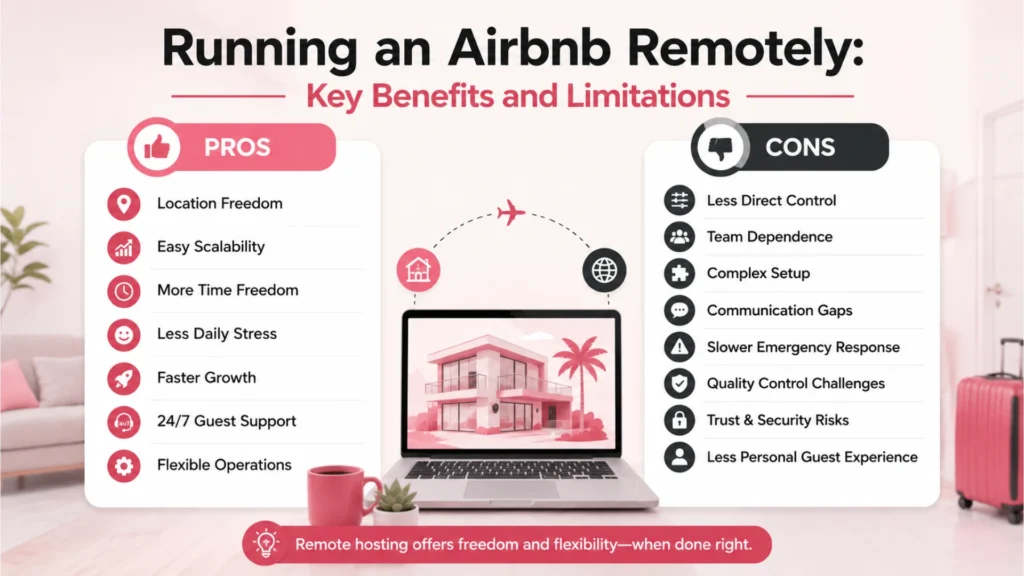
Pros and Cons of Running Airbnb Without Being There
Remote management offers many benefits, such as greater flexibility and easier property growth. However, it can also create challenges, especially when handling emergencies, maintenance issues, or guest concerns from a distance.
Pros
Here are some benefits of running remote management
- Location freedom. You don’t need to stay near your properties. As long as you have internet access, you can manage your Airbnb business from anywhere in the world.
- Easy to Scale. Once you build good systems, you can add more properties without much extra work. This makes it easier to grow your business and increase your income.
- More Time for What Matters. Automation tools and support teams can handle guest messages, bookings, and cleaning schedules. This saves time and lets you focus on bigger goals.
- Less Daily Stress. With the right team and processes, your business can run smoothly without your constant attention. This reduces stress and creates a more hands-off income stream.
- Faster Business Growth. Remote systems make it easier to take on new properties in different cities or countries. Growth becomes less dependent on your location.
- 24/7 Guest Support. A virtual assistant or support team can respond to guests around the clock. This helps improve guest satisfaction and response times.
- Flexible Team Structure. You can hire cleaners, maintenance staff, and co-hosts only when needed. This keeps operations flexible and efficient.
Cons
Here are some drawbacks of running remote management
- Less Direct Control. You are not at the property every day. Small issues can be missed until a guest reports them.
- Dependence on the Team. Your success depends heavily on cleaners, co-hosts, and maintenance staff. Poor performance from one team member can affect guest experience.
- Setup Complexity. Building systems, hiring staff, and creating procedures take time. The initial setup can feel overwhelming.
- Risk of Miscommunication. Messages may pass through multiple people before reaching the right person. This can lead to mistakes or delays.
- Slower Emergency Response. Urgent issues may take longer to resolve when you are not nearby. Guests may experience more inconvenience during emergencies.
- Quality Control Challenges. It can be harder to maintain consistent standards across all properties. Regular inspections become more important.
- Trust and Security Concerns. You must trust others with property access and guest interactions. A poor hiring decision can create risks.
- Less Personal Guest Interaction. Guests may receive less face-to-face support. Some travelers prefer a more personal hosting experience.
Biggest Challenges of Remote Airbnb (And How to Solve Them)
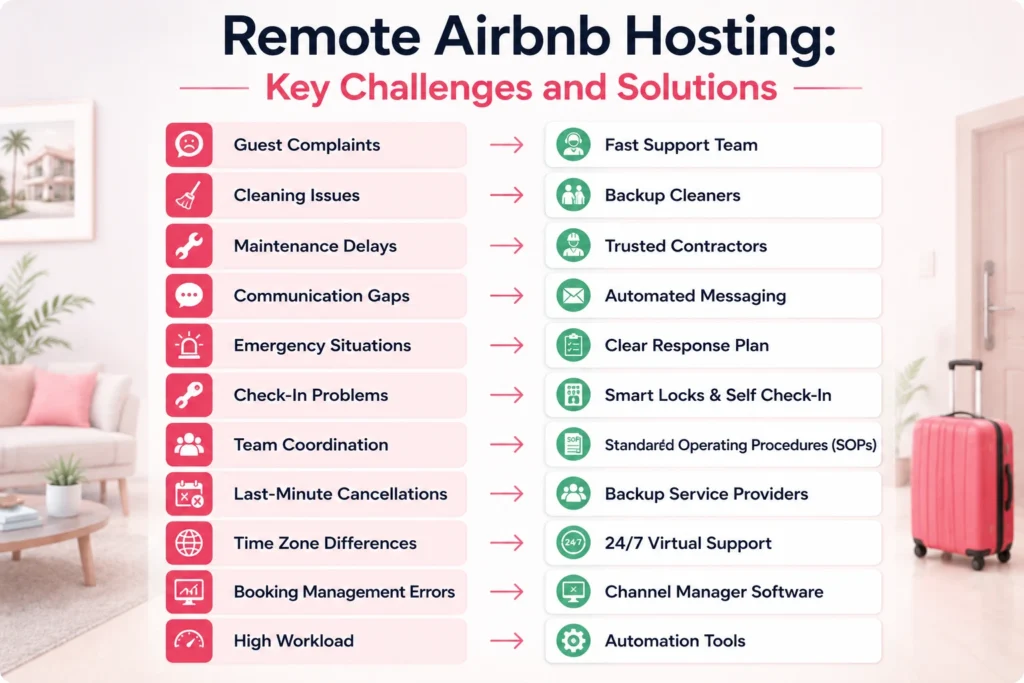
Remote Airbnb hosting has its challenges, but good systems and reliable support can keep operations running smoothly.
Challenges & Solutions
Guest complaints. Guest complaints can happen at any time, from noise issues to check-in problems. If not handled quickly, they can lead to bad reviews and unhappy guests.
A virtual assistant can monitor messages and respond fast to common issues. More serious problems can be passed to the host or property manager for immediate action.
Cleaning issues. Cleaning issues, such as cancellations, delays, or poor-quality work, can quickly lead to guest complaints and bad reviews.
Keep 2–3 professional backup cleaners available for each property. This helps ensure someone can step in quickly when a problem arises.
Maintenance delays. Maintenance issues like broken AC units, leaking faucets, or faulty locks can quickly frustrate guests and lead to bad reviews.
Keep a list of trusted local plumbers, electricians, locksmiths, and other contractors. This helps you get repairs done quickly when problems occur.
Communication gaps. Poor communication can cause guest frustration, missed information, and extra work for hosts.
Use automated messages and reply templates to provide timely updates and answer common questions quickly and consistently.
Virtual Assistant vs Co-Host: Which One Do You Need?
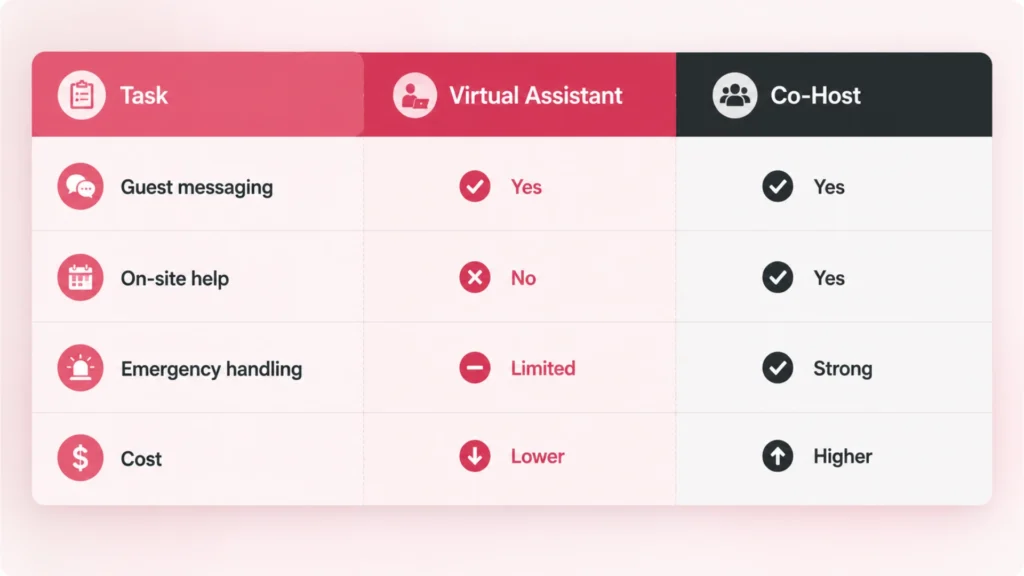
A virtual assistant can handle guest communication, bookings, and other remote tasks. A local co-host can assist with check-ins, maintenance, and on-site guest support.
Comparison Table
The table below provides a clear comparison of the roles and responsibilities of a virtual assistant and a co-host.
For a deeper side-by-side look, you may also want to read Airbnb Co-Host vs Property Management Company: Which Is Better for Your Short-Term Rental?
How Much Does It Cost to Run Airbnb Remotely?
The cost of remote Airbnb management depends on your property, location, and support team. In many cases, it is more affordable than hiring a full-service property management company.
Cost Breakdown
Remote Airbnb management includes a few key ongoing expenses that support daily operations. Each cost helps keep the property organized, guest-ready, and running smoothly.
A virtual assistant usually costs $3–$10 per hour and handles guest communication, booking management, scheduling, and other administrative tasks. Rates vary based on experience and location, with many assistants from lower-cost regions offering excellent value.
A cleaner is paid per turnover rather than by the hour, meaning you pay each time a guest checks out and the unit needs to be reset for the next arrival. This keeps costs tied directly to occupancy, so you are not paying for cleaning during vacant periods.
A co-host typically charges 10–25% of revenue and handles local operations such as cleaning coordination, maintenance, and guest support. Since their pay is tied to revenue, they are motivated to help improve bookings and performance.
Tools and software usually require a monthly subscription. They help with pricing, bookings, smart locks, guest communication, and property monitoring. These costs are predictable, but it’s a good idea to review them regularly and remove any tools you no longer use.
The overall insight is that these costs are usually manageable and help create a system that runs smoothly with less daily involvement. Success depends on using reliable people, tools, and clear processes. You can see exact plan options on our Pricing page.
When Running Airbnb Remotely Works Best
Remote hosting works best with good systems, steady demand, and reliable support.
Ideal Conditions
- Multiple Listings. Remote management becomes more efficient when you manage several properties with the same systems and processes.
- High-Demand Location. Properties in popular destinations often receive steady bookings, which helps maintain consistent revenue.
- Reliable Cleaners. A dependable cleaning team ensures that guests arrive at a clean, well-prepared property every time.
- Strong Automation Setup. Automation tools help manage bookings, guest communication, pricing, and check-ins with less manual work.
When You Should NOT Run Airbnb Remotely
Remote Airbnb management can be difficult without reliable local support and clear systems. If you cannot handle guest needs, cleaning, or maintenance quickly, remote hosting may not be the best option.
Risk Situations
Remote hosting is not the right fit for every property. If your property lacks reliable local support, strong systems, or consistent demand, managing it from a distance can become stressful and time-consuming.
- No trusted team. If you don’t have a reliable cleaner, handyperson, or co-host nearby, even small issues can turn into guest complaints or refunds fast.
- High-maintenance property. Older homes, pools, hot tubs, and large gardens often need regular maintenance and quick attention that is hard to manage without reliable support.
- Strict regulations. Some cities require a local contact or regular in-person inspections, making remote management more difficult.
- Frequent emergencies. If your property often faces plumbing, security, or maintenance issues, you will need a reliable local person who can respond quickly.
Legal Considerations for Remote Airbnb Hosting
Remote hosting does not remove your legal responsibilities. You must still follow all local rules, permits, taxes, and safety requirements, even when managing the property from afar.
Key Legal Areas for Remote Airbnb Hosting
- Short-Term Rental License. Obtain any required permits or licenses before hosting.
- Business Registration. Register your rental business if local laws require it.
- Occupancy Limits. Follow maximum guest limits set by local authorities.
- Income Tax Reporting. Declare Airbnb income according to tax regulations.
- Zoning Laws. Ensure short-term rentals are allowed in your property’s zoning area.
- HOA or Building Regulations. Comply with homeowner association, condo, or building rules.
- Guest Registration Requirements. Report guest information to authorities when required.
Why Remote Airbnb Hosting Is Growing Fast
Remote hosting is growing fast as automation tools improve, more people invest in properties worldwide, and many owners can manage their business from anywhere.
- Digital Nomad Investors. Remote workers buy properties in different locations and earn rental income from anywhere.
- Cross-Border Property Ownership. More hosts now own and manage properties in countries where they do not live.
- Growth of Co-Hosting Services. Local co-hosts handle daily tasks like check-ins, cleaning, and guest support. Learn more about why property owners should choose an Airbnb co-host service.
- AI and Automation Tools. Smart technology helps hosts manage bookings, pricing, and guest communication remotely.
FAQ
Can I run Airbnb from another country?
Yes, many hosts manage properties internationally using tools and local teams.
Do I need someone local for Airbnb?
Yes, for cleaning, maintenance, and emergencies.
How do guests check in if I’m not there?
Using smart locks or lockboxes with clear instructions.
Is remote Airbnb profitable?
Yes, if managed efficiently with proper systems.
Conclusion
Remote Airbnb hosting is no longer just an option for experienced hosts. With modern tools, better communication systems, and access to local support, many property owners successfully manage their rentals from a different city or even another country.
The biggest advantage is flexibility. Once reliable systems are in place, hosts can manage bookings, guest communication, and day-to-day operations without being physically present at the property.
However, remote hosting also comes with challenges. Emergencies, maintenance issues, and local regulations still require attention, and success often depends on having trustworthy people on the ground who can step in when needed. If you’d like hands-on help building that system, you can get in touch with our team anytime.