When you welcome guests into your Airbnb, clear house rules are just as important as a clean home and great amenities. Well-written Airbnb house rules help set expectations before check-in, reduce misunderstandings, and protect your property without making guests feel restricted. The goal is to create a smooth experience where everyone knows what is expected from the start.
The best Airbnb house rules are simple, friendly, and easy to follow. Instead of listing dozens of strict policies, focus on the rules that matter most for your property, local regulations, and guest safety.
In this guide, you will learn how to write house rules that protect your home, improve guest satisfaction, and encourage positive reviews in 2026.
What Are Airbnb House Rules?
Airbnb house rules are the basic guidelines guests agree to follow during their stay. They help set clear expectations, prevent common issues, and create a better experience for both hosts and guests.
Why Every Airbnb Listing Needs House Rules
Clear house rules help guests know what is expected before they arrive, reducing problems and making every stay smoother.
They also protect your property, save time by answering common questions, and reduce misunderstandings. When guests know the rules in advance, they are more likely to respect your home and enjoy a stress-free stay.
- Prevent misunderstandings between hosts and guests.
- Protect your property from avoidable damage.
- Support a smoother check-in and check-out process
- Set expectations for noise, smoking, pets, and visitors.
- Help guests respect your home and neighbors.
- Reduce the chances of complaints and disputes.
- Encourage responsible guest behavior throughout the stay.
- Make it easier to handle rule violations through Airbnb when needed.
- Create a better experience that can lead to positive reviews for both hosts and guests.
Airbnb Rules vs House Manual
Many Airbnb hosts use house rules and a house manual together, but they are not the same. Each serves a different purpose and helps create a better guest experience.
Here you can see:
| Airbnb House Rules | House Manual |
|---|---|
| Sets the rules guests must follow. | Explains how to use the home and its amenities. |
| Shared on your Airbnb listing before booking. | Usually provided after booking or at check-in. |
| Covers policies like smoking, pets, parties, and quiet hours. | Includes Wi-Fi details, appliance instructions, and local recommendations. |
| Helps protect your property and reduce disputes. | Helps guests feel comfortable and find what they need. |
| Guests agree to these rules when they book. | Guests use it as a guide during their stay. |
| Focuses on expectations and restrictions. | Focuses on instructions and helpful information. |
| Short and easy to scan. | More detailed and practical. |
| Can support you if a guest breaks a listed rule. | Helps reduce questions and improve the guest experience. |
11 Simple Steps to Write Airbnb House Rules
Organized, friendly house rules help guests understand your expectations before they arrive. By keeping your rules clear and easy to follow, you can prevent misunderstandings and protect your property.
Start with a Warm Welcome
A warm welcome is the best way to build trust with your guests from the start. Thank them for choosing your property and let them know you are genuinely happy to host them. A friendly introduction creates a positive first impression and makes your house rules feel helpful instead of strict. When guests feel welcome and valued, they are naturally more likely to respect your rules throughout their stay.
State the Purpose of the Rules
People are much more likely to follow your house rules when they understand why they exist. Instead of simply listing rules, briefly explain their purpose. Let guests know the rules help protect the property, respect your neighbors, and create a better experience for future guests.
Keep the Tone Friendly and Respectful
If you want guests to follow your house rules, write them in a friendly and respectful tone. Use polite, positive language instead of commands or warnings. When guests feel respected, they are much more likely to cooperate and follow your house rules.
Focus on Safety Before Restrictions
Start your house rules with information that helps keep guests safe. This shows that their well-being is your top priority. Include important details such as fire safety, emergency contact numbers, locking doors properly, and using appliances correctly. When guests see that you care about their safety, they’re more likely to leave a good review.
Write Clear and Specific Rules
Guests appreciate clear instructions and transparent communication. Keep your house rules simple, specific, and reasonable so they are easy to understand and follow. Include only the rules that really matter, such as quiet hours, visitor limits, smoking policies, cleaning expectations, or pet rules. Avoid adding unnecessary or confusing rules.
Highlight the Most Important Rules First
Most guests don’t read every word of your house rules. They usually scan for the most important information. That’s why your key rules should appear at the top of the list where they’re easy to find. Prioritize rules about parties, smoking, noise, property damage, house cleaning, check-in, and check-out before moving on to less important details.
Keep the Rules Short and Easy to Scan
Long paragraphs are difficult to read. Use short sentences, bullet points, and simple headings whenever possible. Guests should be able to find important information within a few seconds without reading an entire page.
Mention Consequences Politely (If Necessary)
If a guest breaks one of your house rules, handle the situation calmly and professionally. Stay focused on protecting your property instead of threatening or arguing with the guest. A polite and respectful approach is more effective. When guests feel they’re being treated fairly, they are more likely to cooperate and avoid repeating the same mistake.
Set Realistic Expectations
Be honest about what guests can expect during their stay. If there’s anything that could affect their experience, let them know before they confirm their booking. Mention details such as stairs, shared spaces, street noise, limited parking, check-in times, or any existing damage in the property. Being transparent helps guests make an informed decision and avoids misunderstandings.
End with a Friendly Thank You or Invitation to Ask Questions
Leave a positive and friendly message at the end of your house rules. Thank guests for taking the time to read them and let them know you’re happy to help if they have any questions during their stay. A warm closing leaves a good final impression and encourages open communication.
Why Good House Rules Matter
Good Airbnb house rules do more than set boundaries. Clear rules reduce problems before they happen and make hosting much easier. Clear house rules are a form of clear communication, even before you speak with your guests.
- Prevent Property Damage: Set clear expectations to help guests treat your home and belongings with care.
- Reduce Guest Complaints: Avoid confusion by explaining important rules before guests arrive.
- Avoid Unauthorized Parties: Clearly state your party and visitor policy to prevent unwanted gatherings.
- Protect Neighbors: Include quiet hours and noise guidelines to maintain good relationships with nearby residents.
- Improve Reviews: Guests appreciate clear communication, which often leads to better experiences and more positive Airbnb reviews.
Essential Airbnb House Rules Every Host Should Include
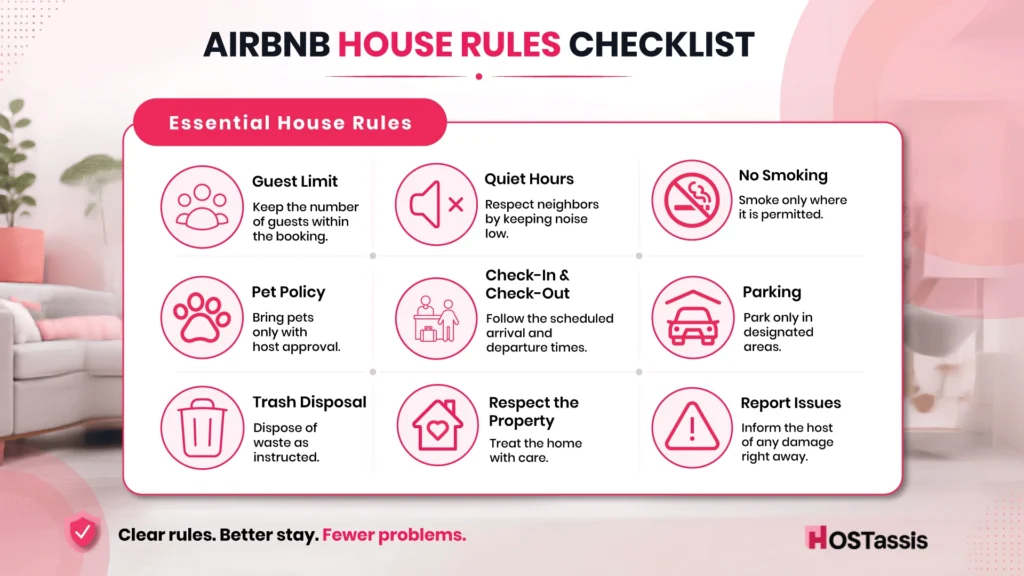
Every Airbnb property is different, but some house rules are essential for every host. These core rules set clear expectations from the beginning. They help prevent common issues and make hosting easier.
Maximum Occupancy
Clearly state the maximum number of guests allowed to stay overnight. Explain that only registered guests included in the reservation may stay, and unapproved overnight guests are not permitted. If the occupancy limit is exceeded, let guests know what may happen, such as additional guest fees, cancellation of the reservation, or being asked to leave, depending on your policy.
It is also helpful to explain why the limit exists. It may be required by local regulations, fire safety rules, insurance policies, or to keep the property safe and comfortable for everyone.
Don’t forget to explain the difference between overnight guests and daytime visitors. If visitors are allowed, clearly state any conditions, such as visiting hours, the maximum number of visitors, or whether they need permission and what they need to do.
Quiet Hours
Set clear quiet hours, such as 10:00 PM to 8:00 AM, and explain that they’re there to respect neighbors and keep the property peaceful for everyone.
Be specific about what counts as excessive noise, including loud music, high TV volume, shouting, speakerphone calls, slamming doors, and gatherings on balconies, patios, or other outdoor areas.
If guests arrive late or leave early, ask them to enter and leave quietly to avoid disturbing others. Also explain what may happen if the rules are ignored. Repeated noise complaints may result in a warning, additional charges, or cancellation of the reservation, depending on your policy.
Smoking Policy
Clearly explain whether smoking, vaping, and e-cigarettes are allowed at your property. If smoking is prohibited, say so directly. Explain that smoking indoors can leave lasting odors, stains, and burn marks on furniture, bedding, curtains, carpets, and walls.
Guests sometimes leave cigarette butts on the ground or in other areas of the property. This can create a serious fire hazard and pose a safety risk. Ask guests to dispose of cigarettes properly using a designated ashtray or waste bin to help prevent accidents and keep the property clean.
If additional cleaning or repairs are required because of smoking, let guests know they may be responsible for the cost.
Pets
Clearly state whether pets are allowed. If they are, explain any restrictions, such as the number of pets, size or breed limits, additional cleaning fees, or areas where pets are not allowed.
Ask guests to keep pets under control at all times and never leave them unattended unless you specifically allow it. Explain that guests are responsible for cleaning up after their pets and for any damage they cause.
If pets are not permitted, mention that only legally recognized service animals are accepted where required by local law.
Visitors
Explain whether guests can invite visitors during their stay. If visitors are allowed, specify the maximum number, visiting hours, and whether you need advance approval.
Make it clear that visitors are not permitted to stay overnight unless they are included in the reservation. This helps prevent overcrowding and ensures your occupancy limits, insurance requirements, and local regulations are followed.
Check-in & Check-out
Clearly state your check-in and check-out times and rules. Include any important arrival instructions, such as key collection, self-check-in details, parking information, or ID requirements. Before departure, let guests know what you expect, such as locking the doors, returning the keys, turning off lights, and leaving the property in reasonable condition.
Clear check-in and check-out instructions help keep your booking calendar organized, allow your cleaning team to stay on schedule, and ensure the property is ready for the next guests.
Parking
Tell guests exactly where they can park and whether parking is free, paid, reserved, or available on a first-come, first-served basis.
If there are height limits, permit requirements, street cleaning schedules, or parking restrictions, mention them clearly. Ask guests not to block driveways, garages, emergency access routes, or neighboring properties.
Providing parking instructions before arrival helps guests avoid unnecessary fines and frustration.
Trash Disposal
Explain how guests should dispose of rubbish and recycling during their stay. Tell them where the bins are located and explain any recycling rules that apply in your area.
If rubbish collection happens on specific days or the building has shared waste facilities, include those details. Asking guests to dispose of rubbish properly helps keep the property clean and prevents unpleasant smells.
Furniture & Decorations
Ask guests not to move furniture or remove decorations without your permission. Rearranging heavy furniture can damage floors, walls, and the furniture itself.
If guests do move something during their stay, ask them to return everything to its original place before checking out. Also explain that decorations, artwork, and household items should remain inside the property unless you have approved otherwise.
Damage Reporting
Accidents can happen, so encourage guests to report any damage as soon as possible in a polite and understanding way. Early reporting gives you time to arrange repairs before the problem becomes worse or affects future guests. Let guests know that you appreciate honesty and would rather hear about an issue straight away than discover it after check-out. This helps resolve problems fairly and keeps communication open.
House Rules That Guests Actually Follow
The best Airbnb house rules are easy to understand and simple to follow. A friendly approach helps guests respect your home without feeling overwhelmed. Clear rules answer common questions before guests need to ask. They also help create a smoother stay with fewer misunderstandings.
Keep Rules Simple
Long lists of rules are easy to ignore. Focus on the most important points and keep each rule short and clear.
- Use short, easy-to-read sentences.
- Include only the rules that really matter.
- Avoid confusing or overly detailed wording.
Use Friendly Language
The way you write your rules matters. A polite and welcoming tone encourages guests to follow them.
- Be respectful instead of demanding.
- Use positive wording whenever possible.
- Make guests feel welcome while setting expectations.
Explain the Reason Behind Rules
Guests are more likely to follow a rule when they understand why it exists.
- Briefly explain the purpose of important rules.
- Mention safety, property care, or respect for neighbours when relevant.
- Keep explanations short and practical.
Reinforce Rules Before Check-in
A simple reminder before arrival helps guests remember the most important rules.
- Share key rules in your pre-arrival message.
- Highlight check-in, parking, and quiet hours.
- Remind guests to ask questions if anything is unclear.
Common House Rule Mistakes
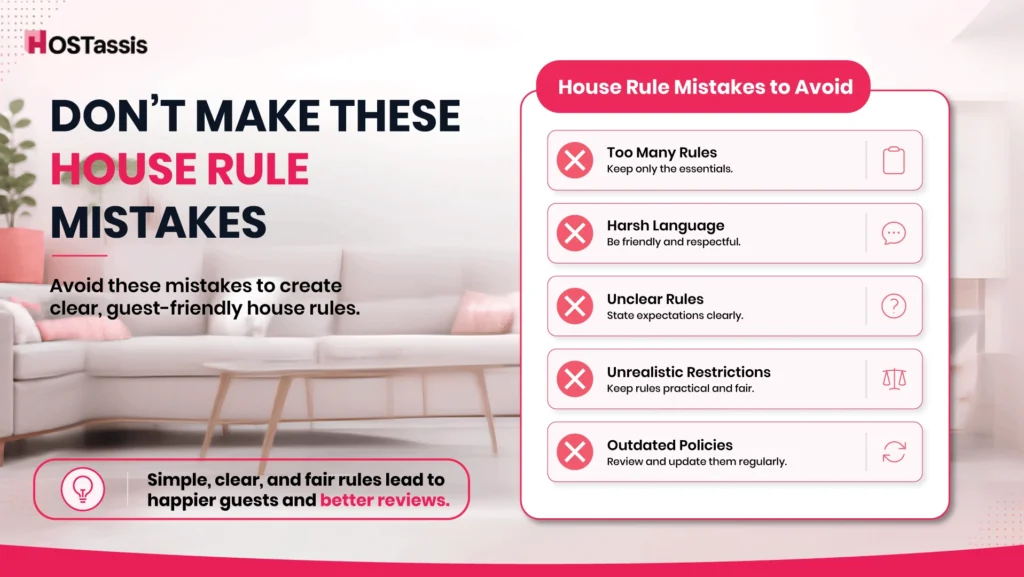
Even good hosts can make mistakes when writing Airbnb house rules. Clear, simple, and fair rules are easier for guests to understand and follow. Small changes in how you write your rules can make a big difference. Standard rules help prevent confusion and create a better guest experience.
Writing Too Many Rules
- Keep your list focused on the rules that matter most.
- Too many rules can overwhelm guests and cause them to miss important information.
Using Harsh or Unfriendly Language
- Write in a polite and welcoming tone.
- Guests respond better to respectful communication than to strict warnings.
Being Vague or Unclear
- State exactly what guests can and cannot do.
- Use clear, specific language so guests know exactly what is expected.
Creating Unrealistic Restrictions
- Make sure your rules are practical and reasonable.
- Avoid rules that are difficult to follow.
Not Updating Your Rules
- Review your house rules regularly as your property or local regulations change.
- Remove outdated information and add new policies when needed.
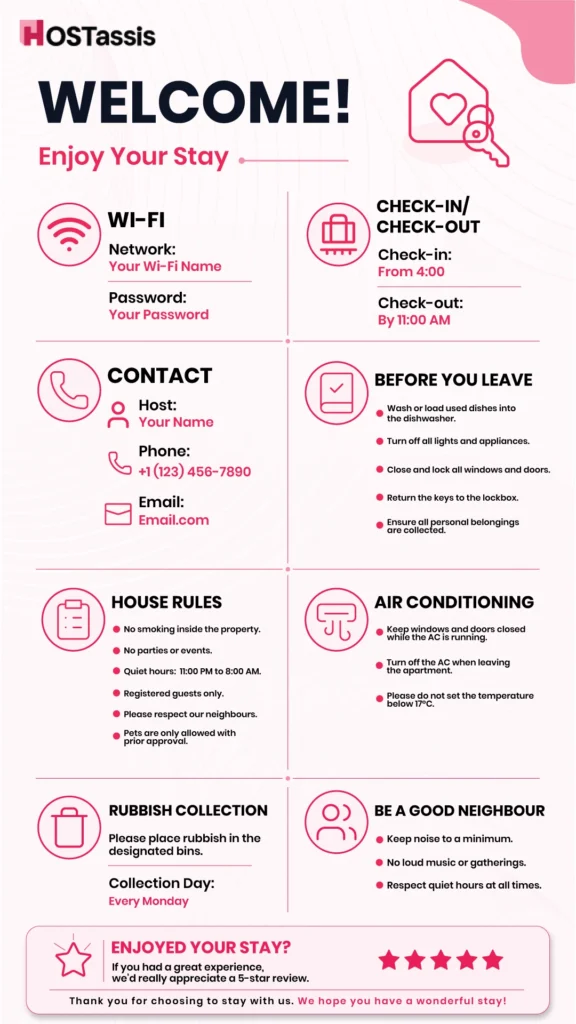
Airbnb House Rules Template
An Airbnb house rules template is a standard set of rules that hosts can customize for their property. A good template covers the key house rules and lets you customize them for your property.
Use this simple template as a starting point and adjust it to fit your home, location, and hosting style.
Conclusion
Clear Airbnb house rules help protect your property and create a better experience for both you and your guests. When your rules are simple, fair, and easy to understand, guests know exactly what is expected, which helps prevent common problems before they happen.
Take the time to review and update your house rules as your property or local requirements change. A well-written set of rules builds trust, reduces misunderstandings, and makes hosting easier while helping guests enjoy a comfortable and stress-free stay.
Frequently Asked Questions
Here are some common questions that Airbnb hosts often ask.
1. Can I Legally Enforce my House Rules?
Yes, as long as they’re clearly listed before booking and follow Airbnb’s policies and local laws.
2. Should House Rules and the House Manual be the Same Document?
No, rules set expectations and restrictions; the manual explains how to use the home.
3. Can I Set a Maximum Occupancy Limit?
Yes, it’s one of the essential rules every host should include.
4. Should I Allow Unregistered Visitors by Default?
No, set clear visitor rules to avoid unauthorized gatherings.
5. Can I Ban Smoking and Vaping Inside the Property?
Yes, this should be clearly stated in your rules.
6. Should I Write a Long, Detailed List of Rules to Cover Everything?
No, too many rules overwhelm guests and cause them to skip the important ones.
7. Should I Explain Why a Rule Exists (e.g. quiet hours)?
Yes, guests are more likely to follow rules when they understand the reason.
8. Can I use Strict or Firm Language to Make Sure Guests Comply?
No, a polite, welcoming tone gets better compliance than harsh wording.
9. Should I Remind Guests of Key Rules Before Check-in?
Yes, reinforcing rules in your pre-arrival message helps guests remember them.
10. Do I need to update my house rules over time?
Yes, review and update them as your property or local regulations change.
11. Are House Rules Legally Enforceable?
Yes, Airbnb house rules can be enforceable if they are clearly listed before booking and comply with Airbnb’s policies and local laws. When guests confirm a reservation, they agree to follow the rules you have set for your property.
If a guest breaks a clearly stated rule, such as no smoking, no parties, or no unauthorized visitors, Airbnb may consider that rule when handling a dispute. To protect your property, keep your Airbnb house rules clear, reasonable, and consistent for every guest.