A guest arrives, drops their bags, and opens the kitchen cupboard. An empty shelf feels unprepared, while a messy cupboard makes simple things hard to find. But a clean, well-stocked cupboard with the right essentials makes the stay feel easy from the start. A fully stocked cupboard makes guests feel valued because it shows that you care about their comfort and have thought about what they may need during their stay. Even small items can make a difference when guests do not have to go out and buy basic things they expected to find in the property.
Many Airbnb hosts spend most of their attention on furniture, photos, décor, and pricing. Those things are important, but what guests find in the cabinets, based on their needs, is also important for a comfortable stay and a good experience.
Well-organized airbnb cupboards make everyday tasks easier, whether guests are preparing breakfast, looking for a fresh towel, cleaning up a small spill, or finding basic bathroom supplies. Having useful items in the right place also helps the property feel organized, practical, and ready for guests.
This guide helps you organize and stock each cupboard in your Airbnb, including the kitchen, bathroom, linen, utility, and owner’s cupboards, with a practical checklist for each.
A co-host can manage restocking and turnover checks on the host’s behalf. Learn more about the Hostassis Airbnb Virtual Assistant
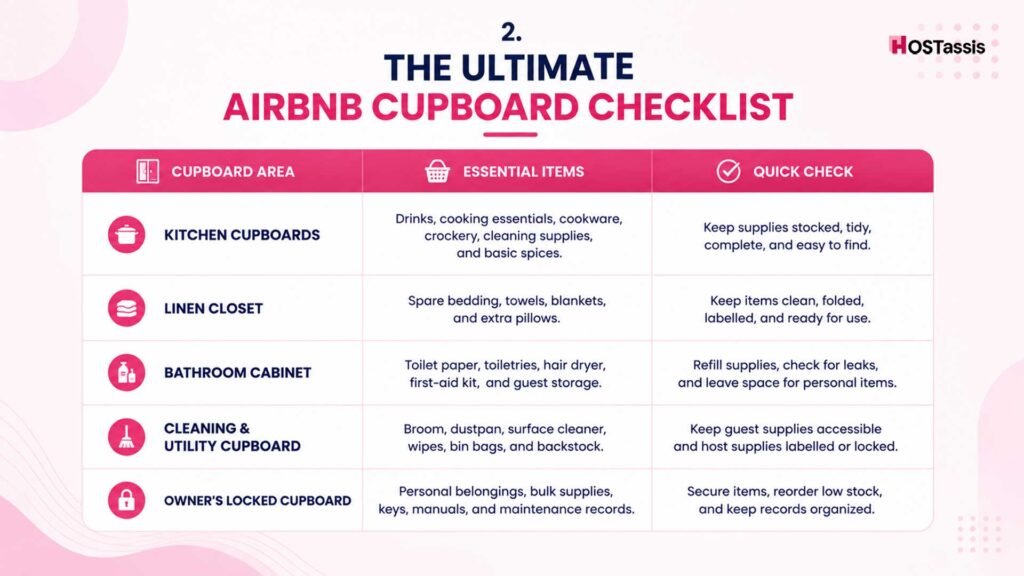
The 5 Cupboard Types Every Airbnb Host Needs to Understand
A well-organized Airbnb needs more than just a kitchen cupboard. Different cupboards serve different purposes and help guests find what they need during their stay. If you keep these essential items in the cupboards, it will save time for both you and your cleaning team.There are five main types of cupboards every Airbnb host should consider.
1. Kitchen cupboards: Keep cookware, plates, glasses, cooking tools, small appliances, and basic dry goods in the kitchen cupboards. You can also stock some dry foods that guests may find useful during their stay. The cupboard under the sink is a good place to keep basic cleaning products that guests can easily access when needed.
2. Linen closet or wardrobe: Use this space for extra bedding, towels, spare pillows, blankets, and seasonal items. Keep everything clean, folded, and easy to find.
3. Bathroom cabinet: Stock basic toiletries, toilet paper, shampoo, a simple first-aid kit, and other useful bathroom supplies. Items meant for guests should be clearly visible and easy to reach.
4. Cleaning or utility cupboard: Keep basic cleaning tools here so guests can handle small spills or clean during longer stays. You can also keep extra cleaning and restocking supplies in a separate section for your cleaning team.
5. Owner’s locked cupboard: This space is for personal belongings, bulk supplies, expensive products, and anything guests should not use. Keeping these items locked prevents confusion and unnecessary use.
Make sure that any food or other products you provide are fresh and not expired. Check these items regularly during restocking, and remove anything that is damaged, opened, or past its expiry date.
Kitchen Cupboard Checklist
The kitchen cupboard is one of the first places guests check after arriving. They want to see what they can use to make a quick meal, where the coffee and other essentials are kept, and whether they have everything they need for their stay. A well-stocked and organized kitchen makes cooking easier and helps guests keep the space clean and tidy.
The Pantry / Dry Goods Cupboard
You do not need to fill the cupboard with food. Just provide a few useful basics that most guests will appreciate.
Keep these items:
- Coffee, tea bags, sugar, and sweetener
- Cooking oil, such as vegetable or olive oil
- Salt and pepper
- A few basic spices, such as garlic powder, paprika, and cumin
- Simple snacks like crackers, nuts, or instant oats if you want to offer something extra
Host tip: Check these items during every turnover. Replace anything empty, expired, messy, or no longer suitable for the next guest. The cupboard should always look clean and ready to use.
The Cookware & Equipment Cupboard
Some guests prefer to cook their own meals instead of eating out or ordering food. To make cooking easy for them, your kitchen should have the basic cookware and equipment they need.
You should also provide:
- A baking dish
- Mixing bowl
- Colander
- Cooking utensils
- Spatula and serving spoon
- Silicone utensils that will not scratch your pans
For a studio or one-bedroom property, provide at least one saucepan and one frying pan. Larger properties should have enough cookware for the number of guests they accommodate.
Host tip: Labels can make a big difference. Guests can quickly find what they need and know where to return it after use. This also makes it easier for your cleaning team to check that nothing is missing.
The Glassware & Crockery Cupboard
Keep enough plates, bowls, glasses, mugs, and cutlery for everyone staying at the property. A few extra items are also helpful because some may be in the dishwasher, break, or go missing.
A simple rule is to keep a few extra plates, glasses, and cutlery for your guests. For example, if your Airbnb can host four people, keeping around eight of each is a good idea. This way, guests still have extras if some are being washed or accidentally get broken.
Choose simple sets that are easy to replace. Keep extra replacement pieces in your private host cupboard rather than filling the guest cupboards with too many items.
The Under-Sink Cabinet
Guests should be able to clean up small spills and wash their dishes easily.
Keep these items where guests can see and reach them:
- Dish soap
- A clean sponge or dish brush
- All-purpose cleaner
- Bin bags
Provide enough bin bags for the expected length of the stay. Do not keep these basic cleaning items in places where guests cannot find them easily. If guests cannot find dish soap or bin bags, they may leave the kitchen messy or message you to ask where everything is.
Locked vs. Unlocked in the Kitchen
It is fine to have one locked kitchen cupboard for your own supplies. You can keep separate cupboards for yourself and your guests. If one cupboard is for your personal or host supplies, mention it clearly in your house rules and ask guests not to use or open it.
However, everyday cooking and cleaning supplies should always be available to guests if they are included in your listing.
Quick Kitchen Cupboard Checklist
Use this quick checklist to make sure your kitchen cupboards have all the basic items guests may need.
| Must-Have | Nice to have |
| Coffee, tea, and sugar | Small spice selection |
| Cooking oil, salt, and pepper | Cabinet labels |
| Cookware and utensils | Drawer dividers |
| Plates, glasses, and cutlery | Simple kitchen guide |
| Dish soap and clean sponge | Appliance cord organizers |
| Bin bags | Extra snacks |
Linen Closet Checklist : Keep Every Turnover Simple and Fast
A well-organized linen closet can make a big difference during guest turnovers. Your cleaner should be able to open the closet, find what they need, and get back to work without wasting time searching. It also helps you stay prepared when bedding or towels need to be replaced at the last minute.
Keep Backup Bedding Ready
Keep at least one complete spare bedding set for every bed in your Airbnb. Each set should include a fitted sheet, flat sheet, duvet cover, and pillowcases.
Store each set together instead of placing sheets and pillowcases on different shelves. You can fold the smaller pieces and keep them inside the matching duvet cover. This makes it much easier for your cleaning team to grab one complete set.
If your property has several bedrooms with different bed sizes, label or separate the bedding by room. You can also use different colors to avoid confusion.
Why keep backups?
During a same-day turnover, there may not be enough time to wash and dry the used bedding before the next guest arrives. A clean spare set allows your cleaner to make the bed immediately while the used linen goes into the wash.
Stock Enough Towels
Provide at least one bath towel, hand towel, and face cloth for each guest. You should also keep extra sets in the linen closet in case something gets stained, damaged, or needs replacing.
White towels are a practical choice for Airbnb properties. They are easy to wash together, stains are easier to spot, and you can replace individual towels without worrying too much about matching different colors.
Keep bath towels, hand towels, and face cloths on separate shelves or in labeled sections. This saves your cleaner from sorting through a large pile during every turnover.
Make Space for Seasonal Items
Your linen closet can also hold items that guests only need at certain times of the year.
Keep extra blankets ready during colder months. For properties near beaches or pools, store enough beach towels for your expected number of guests.
When these items are not needed, place them in labeled storage bags or bins. Vacuum storage bags are useful when closet space is limited.
It is also worth keeping a few spare pillows and pillow protectors available in case a guest needs an extra one or something has to be replaced unexpectedly.
Make the Closet Easy for Cleaners to Use
Organize the closet based on how your cleaning team actually works.
Use labeled shelves or clear bins for bedding, bath towels, hand towels, toiletries, and other supplies. Keep shampoo, shower gel, and similar restocking items together so cleaners can quickly refill what is running low.
Most importantly, keep the system simple. A cleaner should be able to look inside the closet and immediately understand where everything belongs.
Quick Linen Closet Checklist
Use this quick checklist to keep your linen closet organized and ready for every guest turnover.
| Must -Have | Nice-to-Have |
| Backup bedding sets for every bed | Linen fresheners or lavender sachets |
| Extra white towels | Space-saving towel storage |
| Clearly labelled shelves | Vacuum storage bags |
| Extra blankets | Color-coded bedding |
| Spare pillows and pillow protectors | Separate seasonal storage bins |
Bathroom Cabinet Checklist: The Detail That Separates 4-Star from 5-Star
Guests use the bathroom several times a day, so small details here can have a big effect on their stay. A clean and well-stocked bathroom cabinet shows that you have thought about what guests may actually need. It can also save them from messaging you for basic supplies during their stay.
Stock the Bathroom Cabinet with the Basics
Start with the everyday items that guests expect to find.
Always provide enough toilet paper for the number of guests and the length of the booking. Keep at least two extra rolls available as backup. Place them somewhere guests can easily see, such as an open basket or a clearly marked shelf. Guests should not have to search through every cabinet for an extra roll.
Provide shampoo, conditioner, body wash, and hand soap. Refillable dispensers are a practical option because they are easy for your cleaning team to check and restock. Make sure every bottle is clearly labeled so guests know what they are using.
A hair dryer is another useful item to keep in the bathroom if one is not already mounted on the wall.
You can also provide small extras such as cotton pads and Q-tips. They cost very little but can be helpful when a guest forgets to pack their own.
Keep a Basic First Aid Kit
Every Airbnb should have a small first aid kit that guests can access when needed.
Keep it in a clearly marked place and make sure guests know where to find it. You can also mention its location in your welcome guide.
Check the kit regularly during turnovers. Replace anything that has been used and remove expired products. A first aid kit does not need to be large or complicated. The goal is to have basic supplies available for minor cuts and small accidents.
Leave Space for Guests
One common mistake many hosts make is filling every shelf and leaving no space for guests to store their personal items.
Leave at least one shelf, drawer, or section of the cabinet empty for your guests. They need somewhere to keep toothbrushes, skincare products, makeup, medicine, and other personal items.
When guests have proper storage space, the bathroom stays more organized. It also makes the room feel less cluttered and more comfortable, especially during longer stays.
Small Details Can Improve the Guest Experience
You do not need an expensive bathroom to create a good impression. Focus first on cleanliness, useful supplies, and easy access.
Keep soap dispensers full, towels fresh, toilet paper stocked, and toiletries easy to identify. Check these items as part of every turnover instead of waiting for a guest to report that something is missing.
Once the basics are covered, you can add a few thoughtful upgrades. Matching dispensers, a lighted mirror, locally sourced toiletries, or a towel warmer can make the bathroom feel more polished.
Quick Bathroom Cabinet Checklist
Use this quick checklist to keep your Airbnb bathroom stocked, organized, and comfortable for every guest.
| Must-Have | Nice-to-Have | Premium Upgrade |
|---|---|---|
| Extra toilet paper in an easy-to-find place | Cotton pads and Q-tips | Lighted mirror |
| Shampoo, conditioner, body wash and soap | First aid kit | Bluetooth speaker |
| Hair dryer | Small step stool | Towel warmer |
| Empty storage space for guests | Locally sourced toiletries |
Cleaning & Utility Cupboard: The Behind-the-Scenes MVP
Most hosting guides focus on guest rooms, kitchens, and bathrooms. They often forget the utility cupboard. But this small space plays a big role in keeping your property clean, organized, and ready for the next guest.
Guest-Accessible Cleaning Basics
Keep a few simple cleaning items where guests can easily find them:
- A broom and dustpan for quick spills and crumbs.
- Surface wipes or a small bottle of all-purpose cleaner.
- Spare bin bags in a clearly marked place.
- A mop or Swiffer, especially if your property has a busy kitchen or dining area.
Guests are more likely to clean up small messes when the right tools are easy to find. If they cannot find a broom or mop, they may leave the mess for the cleaner or assume it is not their responsibility.
Host Restocking Supplies
Keep extra supplies in a locked section or in a clearly labeled “Host Supplies” box. Include:
- Toilet paper, bin bags, dish soap, sponges, and surface cleaner.
- A printed or digital turnover checklist for the cleaning team.
- Spare lightbulbs, batteries, and remote controls.
- Seasonal items such as extra blankets, beach towels, or fans.
A clear checklist helps cleaners know exactly what to check and replace during every visit. This reduces missed items and last-minute supply runs.
Maximizing Small Utility Spaces
Utility cupboards are often narrow, so use the space carefully:
- Add an over-door organizer for sprays, cloths, and small tools.
- Use labeled bins for cleaning products, paper goods, bathroom supplies, and kitchen supplies.
- Store bulky seasonal items in vacuum bags to save room.
Good organization is not only about making the space look polished. When everything has its place, guests and cleaners can easily find what they need. This helps the property run smoothly, prevents small problems, and creates a better guest experience. Over time, better stays can lead to stronger reviews, more bookings, and better revenue.
The Owner’s Locked Cupboard: What to Store and How to Secure It
Every Airbnb needs a private space for the host. It could be a locked wardrobe, a utility room, or one secure cabinet. Think of it as your private storage space where you can keep extra supplies, important records, and personal items away from guests.
What to Keep Inside
Use the cupboard for items guests should not access, including:
- Personal food, belongings, and anything valuable or sentimental.
- Bulk supplies such as toilet paper, toiletries, bin bags, and cleaning products.
- Spare keys, access cards, remotes, and lock override information.
- Property manuals, maintenance records, and important documents.
- Spare lightbulbs, batteries, remote controls, and router reset instructions.
Keep items grouped in labeled boxes so you or your cleaner can find them quickly. Avoid storing anything irreplaceable unless the cupboard is properly secured.
Choosing the Right Lock
The lock should match the size and importance of the storage space.
- A keypad deadbolt works well for a full wardrobe or large owner’s closet. It does not require a physical key, and the code can be changed when needed.
- A keyed padlock fitted to a sliding hasp is a simple, low-cost choice for a cabinet or small storage area.
- A mechanical combination lock can work for a smaller cupboard where you want a neat, low-profile option.
A large wardrobe needs stronger protection than a small kitchen cabinet. Choose a lock that is secure but still easy for you and your cleaning team to use.
Explain it Simply
A short note in your welcome guide is enough:
“This locked cabinet is for host supplies only and is not for guest use.”
You do not need to explain too much. Most guests will understand as long as you make it clear.
Use a proper lock for private cupboards instead of zip ties or simple child locks. It looks more professional and makes it clear that the cupboard is not for guests.
The Labelling System That Earns 5-Star Reviews
Labels cost very little, but they can make a property much easier to use. When guests can quickly find what they need and know where to put it back, the space feels more thoughtful and welcoming.
Why Labels Matter
Guests should not have to open every cupboard to find a frying pan, extra towels, or wine glasses. Clear labels make the property feel organized and easy to understand.
This often shows up in reviews. Guests may describe the home as “thoughtful,” “well-equipped,” or “like home.” Without labels, they may find the property confusing or mention that they had to ask where things were.
What to Label
Inside kitchen cabinet doors, add:
- A short list showing what belongs on each shelf.
- Simple instructions for putting things back, such as: “Please return pots and pans here, with the handles facing in.”
- A note for items that need special care.
On linen cupboard shelves, label:
- Bath, hand, and face towels.
- Bedding by room or bed size.
- Extra blankets and seasonal items.
If guests and hosts share a bathroom cabinet, mark separate areas as “Guest Use” and “Host Supplies.”
Choose a Style
- Premium: Clear labels with gold lettering for a polished look.
- Mid-range: Printed, laminated cards that are easy to read and replace.
- Budget: Label-maker tape that is quick to apply and update.
Keep the wording short and use the same style throughout the property.
Create a Kitchen Map
Place a laminated A5 card inside the main kitchen cabinet. Add a simple list or sketch showing where the main items belong.
For example:
- Plates and bowls: left cabinet.
- Glasses: top shelf.
- Pots and pans: lower cabinet.
- Coffee supplies: drawer beside the kettle.
This small guide reduces guest questions, helps cleaners reset the kitchen faster, and makes the whole space feel more thoughtfully arranged.
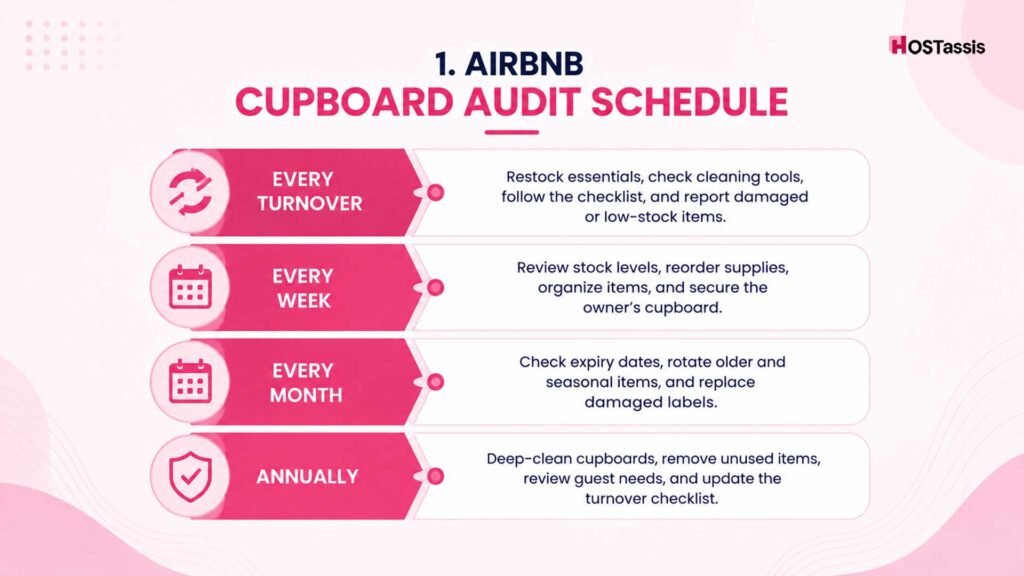
How Often to Audit Your Airbnb Cupboards
Your cupboard setup is only the first step. Regular checks help you keep supplies organized, avoid last-minute problems, and make every turnover easier and more reliable.
At Every Turnover
After each guest leaves, the cleaning team should:
- Restock toilet paper, bin bags, dish soap, coffee, tea, sponges, and surface cleaner.
- Check that guest cleaning tools are in place and easy to find.
- Follow a printed or digital checklist so nothing is missed.
- Report damaged, empty, or nearly empty items before the next arrival.
A checklist removes guesswork and keeps standards consistent, even when different cleaners work on the property.
Every Week
For active listings, review stock levels across all cupboards. Reorder supplies before they run out. If you run out of bin bags or coffee during a guest’s stay, it can easily lead to complaints.
This is also a good time to check that supplies are stored in the right places and that the owner’s locked area remains secure.
Every Month
Once a month, check expiry dates on pantry items and move older stock to the front. Rotate seasonal items such as blankets, fans, beach towels, or winter bedding.
Replace labels that are damaged, faded, or no longer accurate.
Annually
Do a deeper check of every cupboard. Remove items you no longer need, clean inside the cabinets, and check which supplies guests actually use.
Update your turnover checklist based on guest feedback and common issues from the past year.
A HOSTassis virtual co-host can also help with restocks, turnover coordination, and all the small details that need attention between guest stays.
The Master Airbnb Cupboard Checklist
Use this checklist during setup and turnovers. Adjust the quantities to match your property size, guest count, and average stay length.
Kitchen Cupboards
| Item | What to Check |
| Coffee, tea, and sugar | Replace opened or untidy supplies between stays. |
| Cooking oil, salt, and pepper | Grinders are usually easier and cleaner than shakers. |
| Pots, pans, and utensils | Keep at least one complete set; provide more for family-sized homes. |
| Plates, bowls, glasses, and cutlery | Aim for at least twice the maximum guest count. |
| Dish soap, sponges, and bin bags | Store them under the sink or in another easy-to-find location. |
| Basic spices | Four to six everyday options are usually enough. |
Linen Closet
| Item | What to Check |
| Backup bedding | Keep one complete spare set for every bed. |
| Bath, hand, and face towels | White towels are easy to match; provide at least two per guest. |
| Seasonal blankets | Use labelled bins and rotate them when the weather changes. |
| Extra pillows | Store them with clean pillow protectors. |
Bathroom Cabinet
| Item | What to Check |
| Toilet paper | Leave enough for the planned stay, plus a clearly visible spare supply. |
| Shampoo, conditioner, and body wash | Refill dispensers regularly and check for leaks. |
| Hair dryer | Keep it in a labelled drawer, cabinet, or wall-mounted holder. |
| First aid kit | Mark it clearly and mention its location in the welcome guide. |
| Guest storage | Leave at least one clear shelf or section for personal items. |
Cleaning and Utility Cupboard
| Item | What to Check |
| Broom and dustpan | Keep them accessible to guests. |
| Surface cleaner or wipes | Make them easy to find for mid-stay spills. |
| Spare bin bags | Store them in a labelled spot. |
| Backstock | Keep extra supplies in a locked section or marked “Host Supplies” bin |
Owner’s Locked Cupboard
| Item | What to Check |
| Personal belongings | Remove them before arrival unless the cupboard is locked. |
| Bulk supplies | Reorder when stock falls below roughly two stays’ worth. |
| Spare keys and access devices | Label, document, and secure them properly. |
| Manuals and maintenance records | File them by category for quick access. |
Conclusion
Imagine a guest arrives after a long journey and opens a cupboard on their first night. The shelves are clearly labeled, the pantry has the basics, the towels are neatly folded by size, and the bathroom supplies are easy to find.
They may not mention every small detail in their review, but they will notice how easy and comfortable the property feels. It shows that the home is well cared for and that you have thought about what guests might need.
That is the real value of an organized cupboard. You do not need expensive upgrades. A little planning and regular attention can make a big difference. When everything has its own place, guests have fewer questions, cleaners can prepare the property faster, and important supplies are less likely to run out.
Over time, these small details can lead to happier guests, better reviews, repeat bookings, and a better overall guest experience.
Talk to us about your property Hostassis